Reading Levels
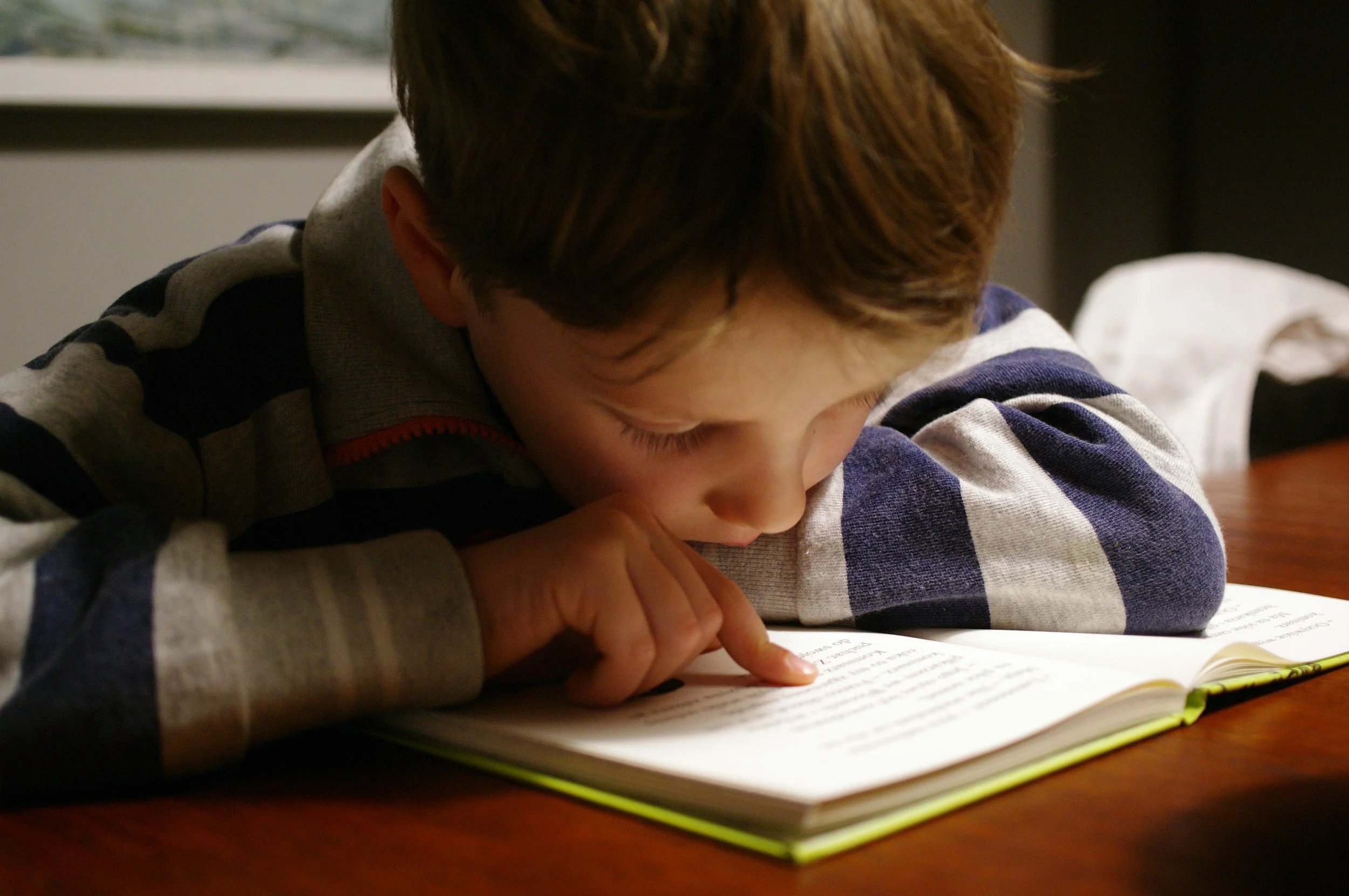
Below I list a variety of methods to help you understand your child’s reading level. Consider a simple start to your exploration, such as the San Diego Quick Assessment.
By Michele Evard, PhD
Homeschoolers sometimes wonder if their children are reading “at grade level” and what that means on a practical level. While we all know that young children may learn different words based on their environments and experiences, we also know that reading skills build on each other. Educators have been able to identify patterns in language development, and we as homeschoolers can use those to assist our children.
Since children’s books are often categorized by complexity, knowing your child’s level can help you select books that help them build their reading skills without boring them or overwhelming them. For example, if you know your child can read independently at a third grade level, when reading aloud together you could choose books classified as fourth grade level, and avoid those written for first graders.
Reading assessments can help identify learning challenges that your child may face, such as dyslexia. Early identification of learning differences provides an opportunity for early intervention, and reduces frustration.
Some states require parents to provide a homeschooled education that is “equivalent" to public school instruction, and some ask for progress reports. Periodic reading assessments can help you be confident that you have met the local requirements.
San Diego Quick Assessment
The San Diego Quick Assessment (SDQA) is a simple public domain reading test that helps homeschool families estimate a child’s reading level based on word recognition. Students read grade-level word lists aloud, giving insight into decoding skills and reading readiness. It’s a quick first step for identifying struggles and choosing the right materials.
You can read more about the history and background of this public domain resource and how to use it with your child here.
Scholastic Reading Placement Tests
Scholastic Teachables offers printable reading placement tests and skill assessments to help homeschool families evaluate comprehension, vocabulary, and reading readiness. With teacher-created resources across grade levels, it’s a flexible way to assess progress and guide instruction at home.
You can use the results of these assessments in the Scholastic Book Wizard, and discover Scholastic books by reading level.
Understanding the 4 key types of Reading Assessments
This guide explains the four key types of reading assessments—screening, diagnostic, progress monitoring, and summative—to help homeschool families understand reading development. These tools help identify struggles early, guide instruction, and track growth over time, making it easier to support confident, capable readers.
Free Decoding Assessments
Assessments from Really Great Reading help homeschool families identify decoding and phonics gaps quickly. In just 5–7 minutes per student, these one-on-one tools assess word reading, phonics, and foundational literacy skills to pinpoint strengths and weaknesses, thus guiding instruction and supporting struggling readers.
Free Dyslexia Test
This free Lexercise dyslexia test helps homeschool families screen for reading challenges in just 5–10 minutes. Using science-backed tools, it evaluates word reading skills and identifies potential signs of dyslexia. Results are immediate, making it a helpful first step before seeking further evaluation or support.
Reading A-Z Assessment
This Reading A-Z assessment system helps homeschool families determine a child’s reading level and track progress over time. Using a 3-step process—reading aloud (running records), retelling, and comprehension quizzes—it provides a well-rounded view of reading ability and readiness to advance.
Pioneer Valley Books Free Reading Assessments
These free reading assessments from Pioneer Valley Books help homeschool families quickly identify a child’s reading level and track progress. Tools assess phonics, letter sounds, word recognition, and comprehension, making it easier to choose “just right” books and guide instruction.
Macmillan Online Reading Level Test
The free Macmillan online reading level test helps homeschool families quickly assess reading ability. Students answer interactive questions using images and context clues to determine their level and choose appropriately leveled books. A simple, no-prep tool for reading placement and progress tracking.
IXL Universal Reading Screeners
Online learning platform IXL provides its users with a variety of diagnostic assessments.
IXL explains it “automatically creates a personalized learning plan of the exact skills your child is ready to learn next. IXL’s diagnostic levels and recommendations update continuously as your child learns on IXL, so you always have a clear view of their current progress and how to support them best."
Common Core ELA Standards Explained
Understanding the Common Core standards can help parents and educators identify what students are expected to know at various levels.
The Common Core ELA standards outline what students should know in reading, writing, speaking, and language skills from K–12. Designed to build toward college and career readiness, they emphasize critical thinking, text-based evidence, and literacy across subjects like history and science. A helpful framework for homeschool curriculum planning and skill development.
California ELA Standards
The California ELA standards outline what students should learn in reading, writing, speaking, and language from K–12. They emphasize critical thinking, evidence-based reading, and literacy across subjects like history and science. A helpful framework for homeschool curriculum planning, skill progression, and college readiness.
Massachusetts ELA Standards
The Massachusetts ELA Curriculum Framework outlines what students should learn in reading, writing, speaking, and language from Pre-K through 12th grade. Built on research and best practices, the framework emphasizes critical thinking, cross-subject literacy, and college readiness. This can serve as a helpful guide for homeschool planning, skill development, and aligning instruction with high academic standards.
Beyond the Page Curriculum Overview
Some curriculum providers explain how they meet reading standards in their lessons, as Beyond the Page does.
Moving Beyond the Page is a comprehensive homeschool curriculum that goes beyond standards with literature-based, project-driven learning. It integrates science, social studies, and language arts to build critical thinking, creativity, and real-world understanding. Designed for advanced learners but adaptable for all, it’s a strong option for engaging, hands-on homeschool education.
Conclusion
Learning is an individual experience, and your perspective on your own child’s growth and development is key. The tools shared here can help you learn more about your child’s progress, but can’t replace your own observations. I hope the information is beneficial to you as you help your child learn and grow.
Michele Evard is a veteran homeschooling parent and an independent educational consultant who specializes in working with homeschoolers. She can be contacted by email to michele@evardconsulting.com or through Evard Educational Consulting. If you would like other homeschooling tips or personalized assistance, check out my website.
© 2026 Evard Educational Consulting. All rights reserved.